Why So Many People Feel Exhausted, Overstimulated, and Disconnected
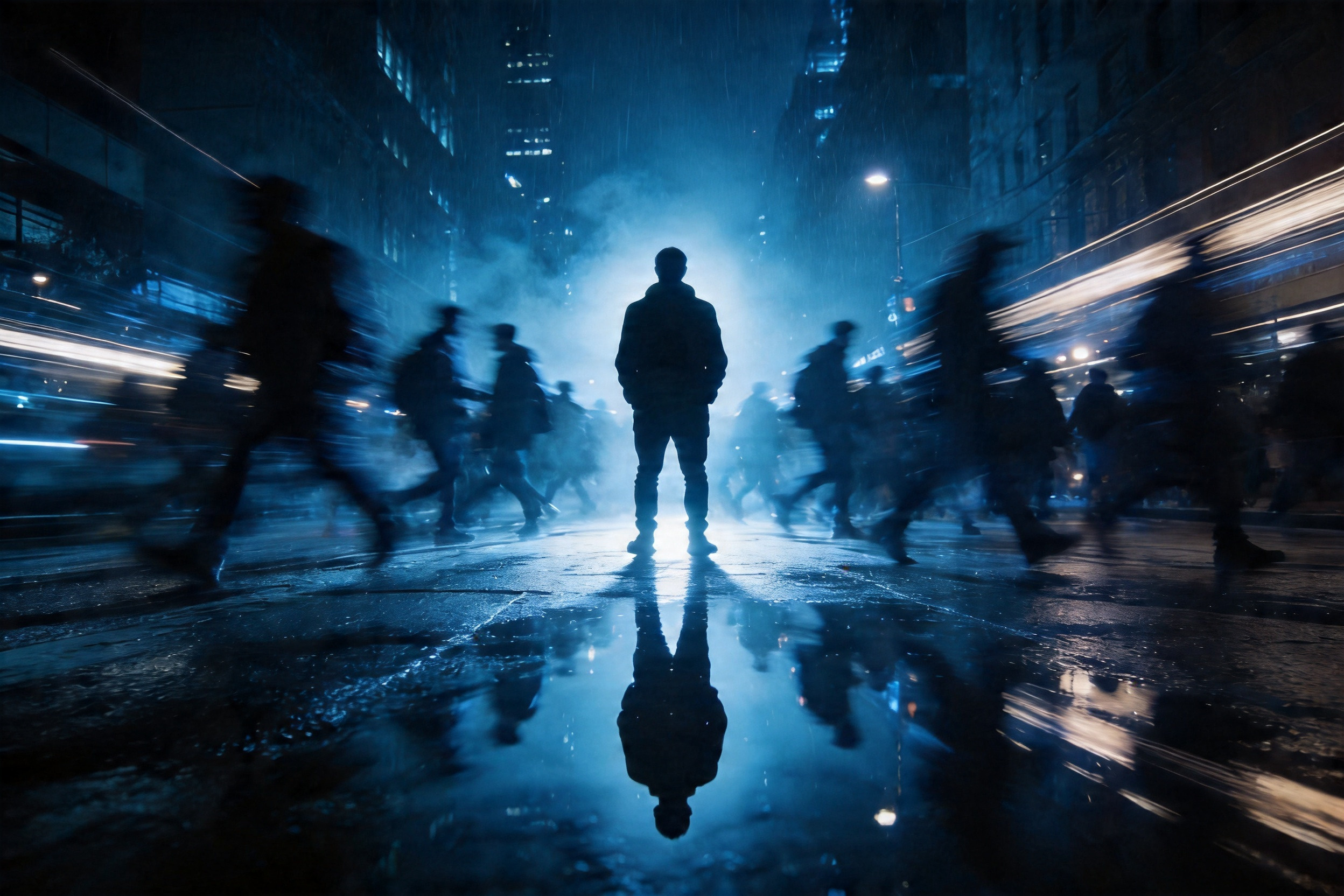
There is a particular kind of exhaustion many people are feeling today that goes beyond physical fatigue.
It is not simply lack of sleep.
Not simply overwork.
Not simply stress.
It is the feeling of a nervous system that never fully turns off.
Modern life has created an environment of continual stimulation.
Everywhere we look, there is movement:
notifications,
messages,
scrolling,
responding,
reacting,
consuming,
processing,
performing,
multitasking.
Very little space remains for true stillness.
One of the strangest realities of modern life is that people are often physically together while mentally somewhere else entirely.
You can sit in a room full of people and experience silence between them while simultaneously watching constant movement through their phones.
Even while watching a movie together, many people are scrolling social media, checking messages, browsing the internet, or responding to emails at the same time.
We have normalized divided attention.
We tell ourselves we are multitasking, but in reality the mind can only fully focus on one thing at a time.
As attention becomes increasingly fragmented, presence becomes more difficult.
We are everywhere mentally —
and nowhere completely.
The Loss of Pause

One of the greatest losses in modern life may be the loss of the pause in between experiences.
Ayurveda teaches that digestion is essential not only for food, but for life itself.
We must digest:
experiences,
emotions,
thoughts,
relationships,
sensory input,
stress,
and stimulation.
But modern life rarely gives us enough space to fully process or assimilate what we are constantly consuming.
Instead, stimuli arrives continuously:
news,
social media,
emails,
text messages,
streaming entertainment,
advertising,
videos,
opinions,
noise,
work demands,
and endless information.
There is little time to stop, reflect, breathe, or internally settle before the next wave arrives.
Perhaps this is one reason so many people feel emotionally saturated yet strangely disconnected at the same time.
The nervous system never fully resets.
Constant Connection, Increasing Disconnection

At times, people seem more lonely now despite constant connection.
Much of today’s communication happens quickly and superficially:
likes,
short comments,
brief text exchanges,
emojis,
rapid responses,
and endless scrolling.
There is often the feeling of “checking the box” of communication without truly communing.
Technology allows us to contact people instantly, yet much of modern connection lacks the warmth and energetic presence of real human interaction:
facial expressions,
tone of voice,
eye contact,
physical presence,
silence,
tenderness,
shared rhythm,
and emotional attunement.
The nervous system recognizes those things deeply.
Without them, people may remain socially connected while emotionally undernourished.
Conversations often feel shorter now.
Attention spans seem reduced.
Patience feels thinner.
There is a subtle but continual urgency beneath modern life:
the need to check,
respond,
know,
update,
react,
and remain visible.
Work no longer truly ends.
Because of constant internet access, communication and productivity now continue well into the evening hours.
The boundary between activity and rest has become increasingly blurred.
Even entertainment can become overstimulating.
Many people spend large portions of the evening scrolling endlessly through streaming platforms or social media searching for relaxation while becoming mentally exhausted by the sheer amount of stimulation itself.
Slowing down now feels unfamiliar to many people.
Sometimes even uncomfortable.
There can be anxiety in disconnecting.
Anxiety in not responding immediately.
Anxiety in not knowing what is happening online.
Anxiety in stepping away from continual input.
The nervous system becomes conditioned to constant stimulation.
And when stimulation is removed, withdrawal-like symptoms may appear:
restlessness,
irritability,
anxiety,
or difficulty settling into stillness.
The Loss of Human Presence

Another subtle shift occurring in modern life is the loss of embodied communication.
Much of human connection traditionally occurred through:
facial expression,
tone of voice,
eye contact,
body language,
energetic presence,
silence,
and subtle observation.
These cues helped people understand one another more deeply and regulate emotionally through genuine connection.
Increasingly, communication occurs through fragmented digital exchanges where tonality, pacing, expression, and nuance are absent.
Misunderstandings become easier.
Projection increases.
Assumptions multiply.
In some ways, people may now be communicating constantly while understanding each other less deeply.
Couples may sit together while each person remains absorbed in separate digital worlds.
Families gather while simultaneously looking at separate screens.
People are physically near one another while psychologically elsewhere.
This disconnection has gradually become normalized.
But normalized does not necessarily mean healthy.
Modern Life & The Aggravation of Vata

From an Ayurvedic perspective, modern life contains many of the exact qualities known to aggravate Vata dosha:
constant movement,
speed,
irregularity,
overstimulation,
travel,
mental overactivity,
lack of routine,
sleep disruption,
and continual sensory input.
Vata governs movement, communication, mental activity, and the nervous system itself.
When Vata becomes aggravated, symptoms may include:
anxiety,
racing thoughts,
insomnia,
restlessness,
hypersensitivity,
digestive irregularity,
emotional instability,
difficulty concentrating,
and nervous system depletion.
Classical Ayurvedic teachings describe the mind as naturally active and mobile.
When overstimulation accumulates without sufficient grounding and restoration, the mind becomes increasingly difficult to quiet.
I notice this clearly in my own life.
If I spend too much time late at night working online, scrolling, researching, or consuming stimulation before bed, my nervous system struggles to settle afterward.
The body may feel tired,
but the mind continues moving.
Thoughts race.
Images replay.
Plans for tomorrow emerge.
Emotional impressions resurface.
Before long, it is two or three in the morning and true rest has never actually arrived.
I also notice that proper rhythm helps restore balance more than almost anything else:
consistent sleep,
timely meals,
appropriate exercise,
quiet evenings,
breathwork,
meditation,
and reducing sensory overload.
Ayurveda teaches that rhythm regulates the nervous system.
Modern life often destroys rhythm completely.
The Performance of Modern Life
I notice these patterns strongly within the dance world as well.
Social media has changed dancers psychologically in profound ways.
Dancers now self-promote constantly and are able to build careers and visibility in ways that did not exist years ago.
There are beautiful aspects to this.
Artists can now share their work globally and connect across countries and cultures instantly.
But there is another side as well.
The nervous system rarely leaves performance mode.
Even during rehearsal breaks, dancers often immediately reach for their phones:
checking social media,
posting content,
monitoring engagement,
watching what others are doing,
maintaining visibility,
and managing personal image.
In some environments, rehearsal itself can begin to feel performative.
There may be an underlying awareness that class or rehearsal footage could later appear online.
External attention begins shaping internal experience.
The pressure to remain visible never fully stops.
Dancers have always compared themselves to one another.
Now there is the added layer of social media popularity, online image, and constant exposure.
The nervous system remains externally oriented almost continuously.
The body may pause briefly,
but internally the mind continues performing.
Silence, Yoga & Returning to Ourselves

One of the things modern people seem to have lost most deeply is silence.
When humans never experience silence, the mind can become like a motor that never fully shuts down.
Without silence, we lose the ability to truly listen —
not only to others,
but to ourselves.
Without silence, many people lose connection to the subtle signals constantly arising within the body and nervous system.
Yoga and meditation have become essential for me personally because they reconnect me to that inner awareness.
Without them, I increasingly feel disconnected from my own center.
Silence retreats have shown me how much internal noise modern life creates.
At first, even in silence, the internal chatter continues:
thinking,
planning,
remembering,
questioning,
reflecting.
Only after several days immersed in breath, stillness, nature, and quiet does the nervous system begin softening more deeply.
Then something subtler begins to emerge:
clarity,
presence,
groundedness,
heightened perception,
quiet joy,
and a more refined connection to oneself.
Nature also affects the nervous system profoundly.
For me, nature soothes and regulates the nervous system in ways modern environments often cannot.
In silence and nature, one begins to perceive something quieter and more subtle:
a different rhythm,
a different pace,
a different form of listening.
Modern life rarely allows access to those states naturally anymore.
When More Becomes Less

Modern culture often teaches us that more is better:
more productivity,
more stimulation,
more information,
more speed,
more performance,
more achievement,
more availability.
Yet many people are discovering that “more” is no longer creating vitality.
Instead, it is creating depletion.
More information —
but less clarity.
More digital connection —
but less genuine connection.
More productivity —
but less presence.
More stimulation —
but less peace.
More activity —
but less resilience.
Ayurveda reminds us that health is not built through constant accumulation, but through balance, restoration, digestion, rhythm, and appropriate use of energy.
Sometimes healing begins not by adding more —
but by reducing what is overwhelming the system.
Less rushing.
Less multitasking.
Less overstimulation.
Less urgency.
Less noise.
And more:
breath,
stillness,
sleep,
presence,
grounding,
nature,
connection,
rhythm,
and space for the nervous system to recover.
Final Thoughts
The modern nervous system is carrying an enormous burden.
Many people are living in continual states of activation without realizing how deeply overstimulated and depleted they have become.
Ayurveda offers a powerful reminder:
human beings were never designed for endless input, constant performance, perpetual urgency, and continual disconnection from natural rhythms.
Healing begins through remembering balance.
Through rhythm.
Through rest.
Through breath.
Through silence.
Through nourishment.
Through embodied presence.
Through reconnecting to the wisdom of the body itself.
Sometimes the most radical thing we can do in modern life is simply slow down enough to fully be where we are.